Nvidia and OpenAI are discussing a possible financial guarantee tied to a vast data-centre campus in southern Ohio, according to The Wall Street Journal and a July 26 Reuters report. The figure attached to that potential guarantee is roughly $250 billion.
This is not a confirmed investment or cash Nvidia has already transferred. The proposed backstop would help OpenAI lease capacity from the project and allow its developer to raise debt on better terms.
The project that has been announced
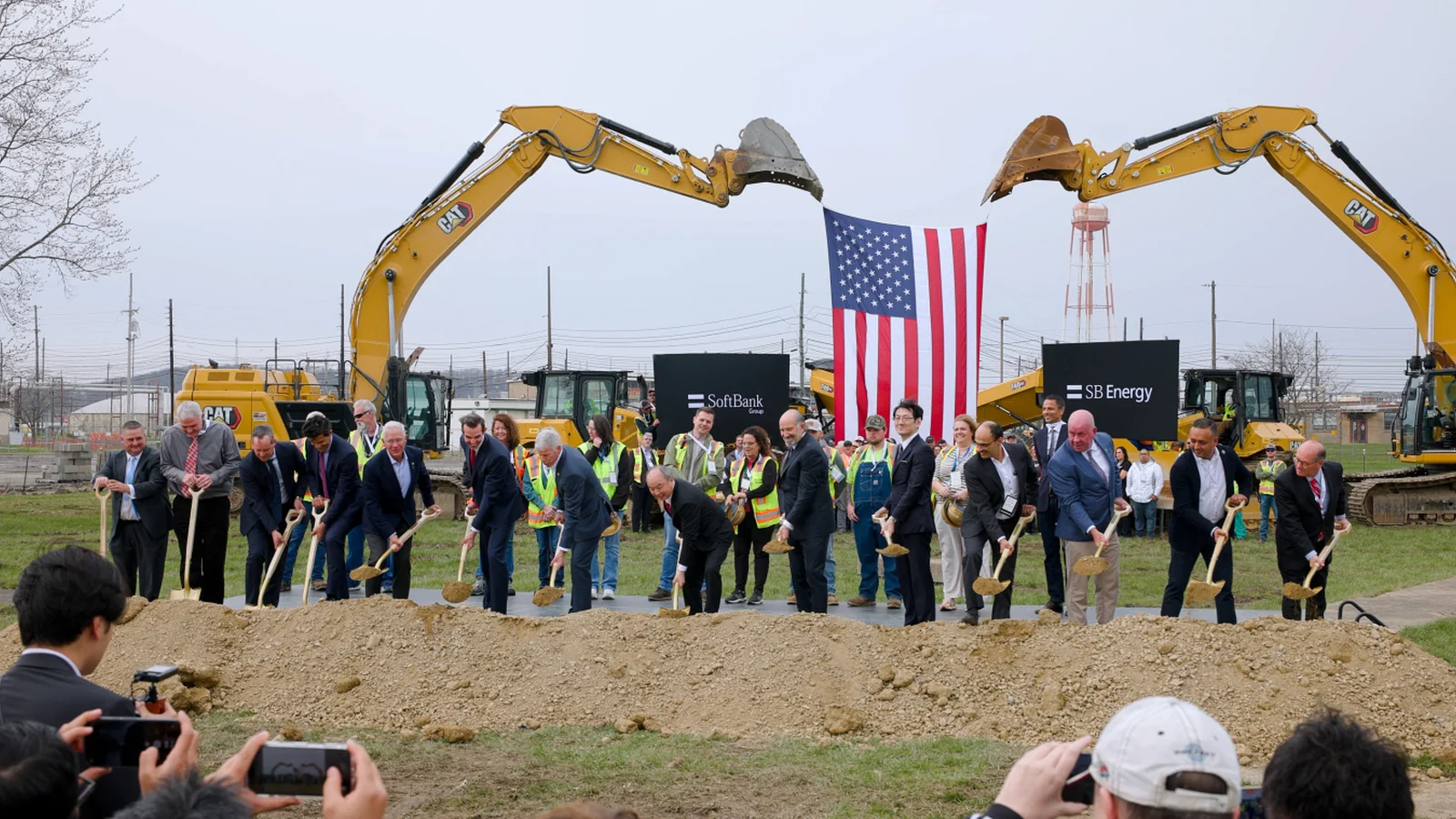
SB Energy, SoftBank’s energy subsidiary, announced a public-private partnership in March on US Department of Energy land in Piketon, Ohio. The official plan calls for a 10-gigawatt AI campus supported by another 10 GW of new power generation. The initial phase would cover 189 acres.
The public announcement confirms the developer, the location and the planned scale. It does not name OpenAI as the main customer or establish a total project cost. That relationship comes from reporting on the financing talks, not from the Department of Energy announcement.
What is under discussion
Reuters, citing the Journal’s reporting, describes a roughly $250 billion guarantee covering the data-centre lease and related debt. Nvidia is also reportedly discussing up to $350 billion in financing for OpenAI’s chip purchases.
Representatives for Nvidia and OpenAI did not immediately comment on the reported talks, Axios said. The terms may therefore change or never be completed.
Where the $600 billion figure comes from
Reuters Breakingviews added the possible $250 billion guarantee to the separate discussion of as much as $350 billion in chip financing. That produces a potential $600 billion exposure.
The total is a columnist’s financial analysis, not the value of an announced contract. It would not necessarily represent an immediate cash outlay either: a guarantee would only be called under the conditions of a final agreement.
Why it matters
Compute capacity is no longer just a chip-manufacturing problem. It also requires land, power generation, transmission, cooling, debt and long-term customer contracts. If Nvidia backs financing for one of its largest customers, it moves from supplier to supporter of some of the infrastructure risk driving its own sales.
That could accelerate deployment, but it would also concentrate risk. If OpenAI’s demand failed to cover its lease commitments, the guarantee’s scope and conditions would become critical. Without a public contract, that exposure cannot yet be measured.
A guarantee is not a cheque
If a lender finances a building because Nvidia guarantees some payments, the lender supplies the capital. Nvidia would pay only under the circumstances defined in the agreement, so the headline amount is not the same as upfront spending.
What remains unconfirmed
- The final size and duration of the guarantee.
- How much would cover the lease and how much would support construction debt.
- Whether chip purchases would receive separate financing.
- OpenAI’s exact role as a tenant.
- The timetable, power suppliers and total cost of each phase.
Has Nvidia already committed $600 billion?
No. That figure combines two reported discussions and appears in Breakingviews analysis; it is not an announced agreement.
Is OpenAI officially the main customer?
Financing reports describe OpenAI as the prospective tenant, but the public campus announcement does not name a main customer.
Is the full 10 GW already operating?
No. Ten gigawatts is the planned capacity of the completed project, and the first phase is still under development.
Verified sources and original reporting.
Nexus AI wrote and contextualized this article using Reuters, Breakingviews and DOE · Jul 26–27, 2026. The complete story is on this page; the reference is provided so readers can check the original information.
Check the main source ↗