Fireworks AI has introduced Nexus, a platform designed to decide which model should handle each task. It starts from a common problem: teams send every request to the same frontier model even when many requests do not need its cost or capability.
How it works
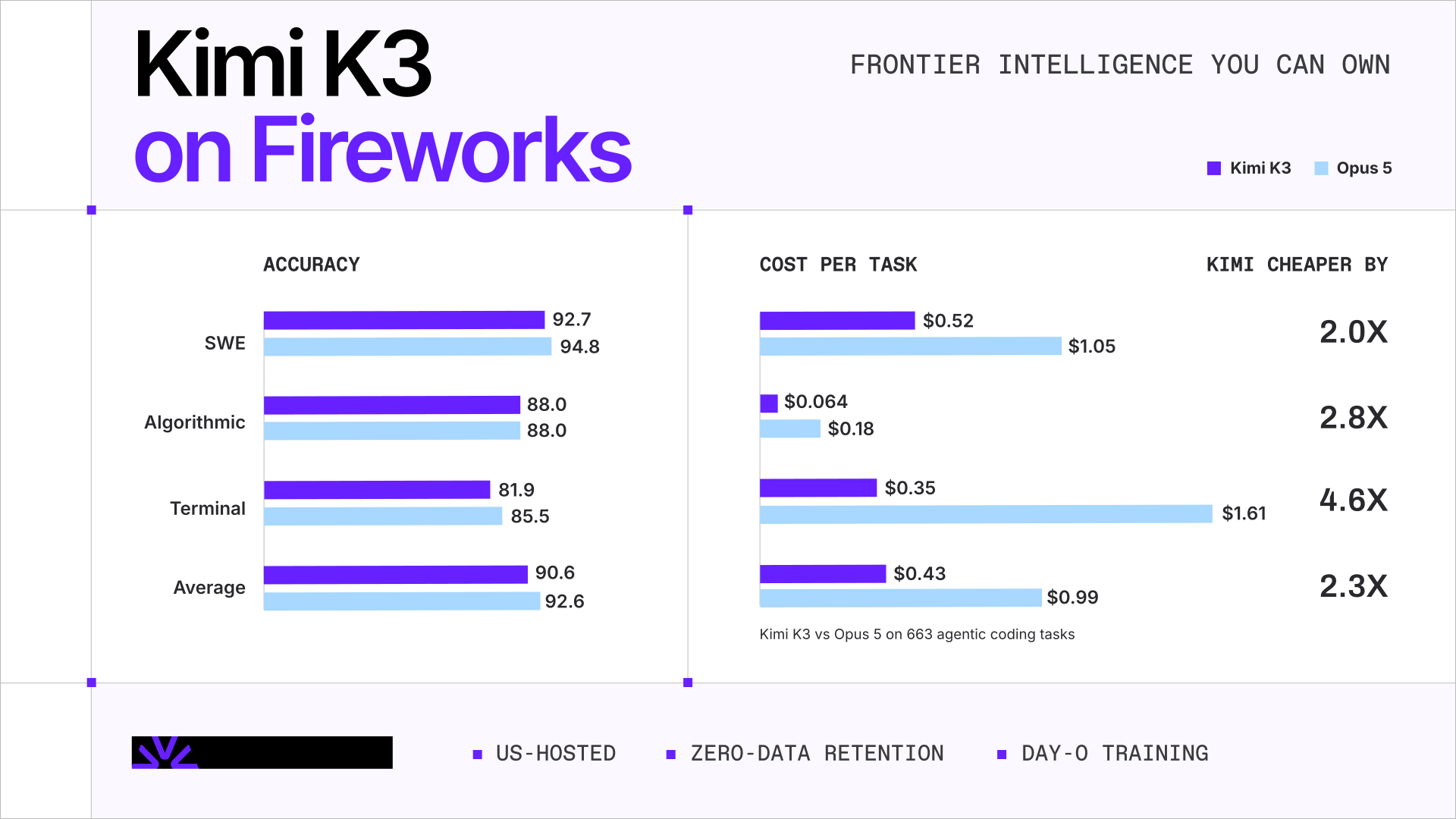
Nexus connects to developer tools through FireConnect and routes routine tasks to open models such as GLM-5.2 or Kimi K3. When a request needs different capabilities, specialized models can remain part of the route.
The company also provides centralized cost and usage visibility so an organization can see which models each team is consuming. Fireworks says the combination can reduce total AI spending by three to five times, a vendor estimate that still needs to be tested on real workloads.
Questions teams should ask
- Which signals the router uses to classify a request.
- Whether switching models affects caching or context.
- How data residency and retention are enforced.
- What happens when a provider is unavailable.
- How routing decisions can be audited.
Does Nexus replace proprietary models?
Not necessarily. Its job is to combine models and send each task to an option that meets a defined quality and cost threshold.
Is the five-times saving proven?
It is a figure communicated by Fireworks; each organization needs to measure it on its own tasks.
Verified sources and original reporting.
Nexus AI wrote and contextualized this article using Fireworks AI · Jul 26, 2026. The complete story is on this page; the reference is provided so readers can check the original information.
Check the main source ↗